Sunday, October 24, 2010

CGS Super Show 2011: Apr. 30/May 1

The best podcast on comics, for me, and one of my favorite podcasts is the Comic Geek Speak one - with new shows Monday through Friday on wide-ranging topics in the comics medium with a group of friends sitting around sharing their opinions and their wealth of knowledge from reading comics for years, it's like those conversations you used to have at the comic shop, back when you hit the shop every Wednesday, predicated on the fact that there was a "good" comic shop in your area.

Coming this spring - on April 30 and May 1, 2010 - will be the third, if I remember correctly, CGS Super Show, their own little comic convention. Dan and I hit it up last year, in Reading, PA, and it was a great little show. It had some good shopping (10 comics for a buck!) and for a small show - one room and easy to make your way around - it had some big-name creators like Jamal Igle, Freddie Williams II, Mike Norton, Lee Weeks, and Walt and Louise Simonson, to name just a few. They also had some independent creators like Andy Jewett, Julian Lytle, Dave Wachter, and Shawn Pryor from PKD Media. It was a great show, and this year Dan and I will be heading down in an official capacity, bringing copies of the new collected and colored Warrior27.

As a way to raise money in anticipation of the show, and a way for the creators to thank the CGS crew for all they do, Comic Geek Speak holds a series of raffles for early ticket buyers, which includes prizes such as original comic pages, original sketches, book bundles, and whatever else the creators can come up with. On the Fly will be offering 2 prize packs for early ticket buyers, which will include one of everything we have currently published (including anything we might get done between now and the end of April). This will include individual issues, chapbooks, mini comics, and promotional items that we might have laying around. The list, at this point, includes the following:

- Warrior27: the Collection (254 pages of comics and prose, many stories newly-colored for this book)
- Warrior27: the Collection, digital copy

- Issues 1-3 (the original b/w issues, which includes a very few pieces not included in the collection, including Dan's hilarious "I Hate Brian Michael Bendis" rants)


- Issue 4 (the multimedia extravaganza, which has a traditional comic, a prose chapbook, a mini-comic that folds out to a game, a CD of a webcomic, and an oversized preview of a proposed comic series)
- In Search Of . . . part 1 - nearly 12,000 words of prose collecting the first half of my serialized novella, which had its start on the burst culture site, 50 years from now

- Life is Funny & A Stone Wall Between Us - a chapbook of my first professional comic story and first prose sale

- Passage - a mini-comic written and drawn by me

- postcards, magnets, and any other promotional items we may still have, including, possibly, copies of the Andy Lee print of our first issue's cover.

For information on the Super Show check this LINK, and to buy your tickets GO HERE. And don't forget to listen to the show.

chris

Wednesday, October 20, 2010

Holding the Center - "Reading" Sam Kieth's ALIENS

It's funny how, once something is in your head, you begin to see it everywhere. It's understandable. With a new understanding, you become more aware. Anyway. That's what occurred this past week.

One of my favorite blogs is the Comics Comics blog from the guys at Picturebox. They know comics - not just what is good, but the process, the history - and the insights you can glean from the posts at the site are fantastic. Definitely worth checking out if you love comics.

Anyway. Frank Santoro - whose books Storeyville and Cold Heat (with Ben Jones) are two of my recent favorites; great, personal comics that don't look like anything else on the stands - likes to write about process over at the Comics Comics site, and recently he's been discussing the "center" of the comic page. How (if I may paraphrase), if you utilize a 6-panel or similar grid, then the center is being given up to the gutters, and the prime portion of real estate on that page, the involuntary focus of the page, is lost.

Santoro goes into this in more depth in his two recent Comics Class posts - Class #1 and Class #2 - and does a far more informed job than I of discussing the importance of the center. It's intriguing and I would recommend hitting the links, and then put Comics Comics into your RSS feed.

This relates to my "Halloween month" revisiting of Mark Verheiden's initial ALIENS trilogy from Dark Horse in the late 80s/early 90s. I hadn't read them in years, and after watching Ridley Scott's director's cut of the original ALIEN, I was excited to dive into the longbox. I'll write about the stories therein later. But what I found interesting was a particular page of art from the third series, subtitled Earth War and drawn by Sam Kieth. The page in question is this one:


This is a complex layout, considering the reading of the panel does not follow the traditional left-to-right/up-and-down path. It goes down the left side of the page, and then jumps back up to read down the right side, despite the lack of dialogue in that final panel.

It made me think of debates I hear on some of my comic podcasts, where they lament the fact that there is no more centralized office where new artists get to learn about comic storytelling from masters of the form, similar to the mythical stories we hear of the Marvel bullpen where artists like George Perez interned with Rich Buckler while learning from others working in the same space. Some artists today want to create these elaborate page layouts, but then we, as readers, don't know how to follow the action on the page.

But Sam Kieth's layout for this page works perfectly, and he is ably assisted by Jim Massara who did the lettering for this series. You can follow the action with my rudimentary photoshop arrows below:


In the first panel, we have a marine reaching into a hole where a second marine has fallen. Our eyes follow the word balloons as they wrap around the first marine's head, following the final balloon as it stretches out into the second panel below, leading us directly to this marine's head in that second panel which is blown through by the alien. The trajectory of the alien's inner mouth (what is that called?) and the blood and brain matter sends our eyes away from the center of the page down to the bottom left corner. The blood spatters all the way to the edge of this panel and our eye falls into the bottom left panel, which has the second marine turning away from the spattering blood and brains - which tie this panel in with the previous one above it. Our eyes then naturally cross over to the panel beside this one - and it is important to note that these two panels at the bottom left of the page are as wide as the second panel right above it, the single gutter going up the right side of these panels effectively demarcating the left and right of the page. In this fourth panel, our eyes are raised up toward the top of the image by the retreating bit of food the alien took with it and the word balloon that falls out of the upper boundary of this panel. And this leads our eye over to the final, tall panel on the right and to the alien hanging above the marines. The dripping blood from the alien's mouth then leads our eye back down to the bottom of this panel and the two marines looking up into its hideous maw.

I was really impressed with how this page was laid out. I know I have encountered some difficulty in reading recent comics, mainly because enough thought has not been put into the layout of the page.

This is what I appreciate from Frank Santoro and other artists like him, and like Sam Kieth in this example. I also found it interesting to note that Kieth, whether conscious or not, refused to give up the center of this particular page. You'll notice that the dividing line between the right and left of the page is off-center, nudged toward the right. And it is telling that the main focus of this page - the alien's attack on the marines - is found within the center, as noted below.


These are things I didn't think about when I was just reading comics. But now that I'm trying to write comics, I examine the books more closely than I ever did. And having teachers like Santoro to show the way at Comic Comics is certainly a help.

chris

Saturday, October 16, 2010

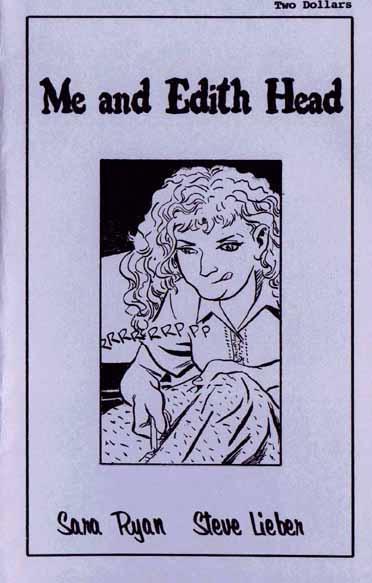
FYC Replay: Me & Edith Head with Sara Ryan and Steve Lieber

Here's another installment in the archiving of my Pulse columns, For Your Consideration. In this one, I had the opportunity to interview, by email, Sara Ryan and Steve Lieber. They were very gracious in taking the time to answer my questions, and when I had the opportunity to meet them in person at the Small Press Expo in 2009, they were just as gracious. The interview is a couple of years old, so the "upcoming projects" question includes work long since completed - except for Mr. Lieber's mention of Greg Rucka's scripts for the third Whiteout miniseries, "Thaw." That has yet to see publication, but I did see the original pages for that first issue - penciled, inked, and lettered - at SPX 2009. I'm not sure when it will find its way onto Oni Press's publication schedule, but when it does, you will not be disappointed. For now, though, enjoy this look at one of the best mini-comics you'll find out there.
Thanks,
chris


FRONT PAGE:
Warren Ellis put it best when he stated, “I’ve always been faintly disgusted by Steve Lieber's level of talent. Now it appears I have to have his wife killed too.” Me and Edith Head is a brilliant lesson in economy. With only fifteen pages, Ryan and Lieber manage to create a complete and fulfilling narrative that will resonate long after you put it down.

The 411:
Me and Edith Head
Written by Sara Ryan
Drawn by Steve Lieber
15pp. b/w
$2.00
Cold Water Press

What It Is (with apologies to Dave the Thune):

Wiser people than I have stated what many know to be true already, but it still bears repeating. Me and Edith Head is one of those gems all fans of the medium should seek out. Originally published in the September/October 2001 issue of Cicada magazine, it stars Katrina Lansdale, a character from Sara Ryan’s first novel Empress of the World. When that issue of Cicada went out of print, Ryan and Lieber decided to publish Edith Head as a 15-page chapbook in 2002 through their own publishing company Cold Water Press, and it was nominated for an Eisner award in the “Best Short Story” category that year.

Katrina is a character easily recognizable to many readers. A high school student dealing with the pressures inherent during that period of our lives, she must also contend with being one of those girls hovering just outside the cliques so ingrained within high school society. Compounding these difficulties, Katrina’s parents are quickly heading toward divorce, something that appears to have been a long time coming. She needs an outlet and auditions for the school play, a production of Shakespeare’s A Midsummer Night’s Dream. Hoping for the part of Titania, Katrina is instead delegated the task of costume designer.

Katrina is disappointed with the position and sees little hope of enjoying her time with the play. But something surprising happens. Katrina discovers a talent for the fashion needs of the company, and with the help of some books on Edith Head – an Oscar-winning costume designer – she discovers an inner confidence of which she was unaware. Growing up is difficult, but sometimes when one’s mind is diverted, it can happen without thinking.

This is an incredible little book. With only fifteen pages, Ryan and Lieber present a fully-fleshed out narrative in which the audience is witness to Katrina’s growth from a troubled teen to a confident young woman. This slim book packs more story into it than any collection from the “Big Two,” with very few exceptions. Ryan and Lieber hit all the high notes of the story, utilizing the comic page to its fullest, while eschewing the padded storytelling practice of decompression so common in many of today’s comics. This husband and wife team also exhibits an understanding of comics as a melding of words and pictures, allowing the images to tell the story in a way most creators never conceive.

One page in particular, in which the audience watches Katrina’s bedroom go from a typical teenage sty to a clean, well-ordered space as snippets of her parents’ dialogue illuminate their decaying relationship, is a prime example of how well thought out and well executed a comic this is. Throughout the story, Ryan’s dialogue is spot-on, and she expands much of the narrative with the unspoken statements lying beneath the characters’ words. And Lieber’s art is as superb as fans have come to expect. He is one of the best artists working in comics today with panels that are fully realized without being cluttered, allowing him to tell any type of story with a craft unmatched by many in the industry. Though not flashy, Lieber’s style is full of substance, and any book drawn by him is always a pleasure to read.

If you’re lucky enough to be attending a convention where Steve Lieber and Sara Ryan are in attendance, seek him out and buy this book. If not, go to Sara's website where you can order it through paypal. You’ll thank me.

An Interview with Sara Ryan and Steve Lieber:

Chris Beckett: What reaction have you gotten from fans at conventions regarding Edith Head and other mini comics you have available?

Steve: The responses have varied from wildly enthusiastic appreciation to indifference to an odd, condescending sort of -- I don't know-- pity, maybe? I'm glad to say that the good reactions have been the most common. The minis I've illustrated are all terrific stories. Edith was nominated for an Eisner; Sean Stewart's Family Reunion was reprinted in The Year's Best Graphic Novels, Comics & Manga. And Sara's first Flytrap story was wonderful. I'm hugely excited that she and Ron Chan are keeping the series going.

The few negative reactions I think just spring from people who haven't grasped that an artist might enjoy telling more than one kind of story. I'm just guessing here, but I get the feeling that the thinking is something like: "You drew Batman and Civil War: Frontline and Whiteout, and here you are with these little xeroxed booklet thingies about characters I've never heard of? What happened?” What happened is that I love drawing both big action stories about larger than life heroes, and smaller, more intimate stories about real people. Mini-comics are a great venue for the latter.

Beckett: With the experience you have in the comics medium, how much input into the story did you have?

Steve: Not much really. Sara's a natural visual storyteller. There might have been a few panels where I'd offer a suggestion to make things flow more easily, but she grasped the underlying mechanisms of comics from the start, and instantly knew how to make her points visually, manipulate time, play word against image -- all the things that a comic writer needs to know intuitively to make the medium work.

Beckett: Why did you choose to present Me and Edith Head as a comic?

Sara: There were a couple of things going on when I decided to write Edith. First, I just wanted to experiment with comics writing. Steve says that comics people are vampires, in that they turn everyone around them into comics people, too. That definitely happened to me. As I read and enjoyed more and more comics and graphic novels, I got increasingly intrigued about the possibility of writing comics myself. And at the same time, I'd just published my first novel, Empress of the World, and introduced some characters that I had -- and have -- a lot of affection for, including Katrina Lansdale. When we meet Katrina in Empress, she's very much a costume and fashion expert, but I knew she hadn't always been that way, and I wanted to tell the story of how she developed that interest and expertise. I also knew that by its nature the story would be very visual, so it just made sense to do it as a comic.

Beckett: Me and Edith Head is as fully realized a story as one could find. How challenging was it to fit it within the fifteen pages of the mini comic?

Sara: Thank you! I tend to write in a very compressed way, whether I'm writing prose or comics. More often than not, I find that I need to add or extend scenes in order for the story in my head to take coherent shape on the page.

Beckett: What was the collaborative process like for you two on Me and Edith Head, and how did it differ from other comics you have done, Steve?

Steve: We just talked about the story and she set to writing. It differed mainly in that I had the writer on-site to clarify matters where I had questions. The script said, "Katrina enters the thrift shop.” I asked how she was entering: tentatively, normally, forcefully? Sara went out of my studio, closed the door behind her and barged back in with squared shoulders and a face that was all business. So I drew that. And it's a story about a teen girl's relationship with clothing and how she dresses, so it was certainly handy for me to have her lean over my board now and then and say things like, "Ooh. She'd never wear that with a belt."

Sara: I would just add that when Steve and I collaborate, it's a little like Calvinball. We keep changing the rules, and sometimes someone has to sing the I'm Very Sorry song. But overall it's fun.

Beckett: What other current or forthcoming projects do each of you have that you might like to speak about?

Steve: I've been doing a ton of commercial and advertising art recently, so a lot of my recent work isn't available in comic’s stores. If you're in Japan, you can see an indoor parade I helped design for the Hello Kitty theme park Sanrio-Puroland. The Thunderbolts Annual I drew for Marvel comes out this month. My current comic projects are Underground - a graphic novel written by Jeff Parker, and a story for the Belgian publisher Dupuis. And of course Greg [Rucka]'s going to be writing the third and final Whiteout book, Thaw. I can't wait to get my hands on that.

Sara: My second novel, The Rules for Hearts, is just out, and I have not one, not two, but three more minicomics collaborations coming soon: "Click," with Dylan Meconis, "Einbahnstrasse Waltz" with Cat Ellis, and the third episode of Flytrap, "Over the Wall," with Ron Chan.

Wednesday, October 13, 2010

Jaime Hernandez knows comic art


I finished reading the latest edition of Love & Rockets: New Stories last week and, as always, was amazed. Gilbert and Jaime are masters of the medium. Beautiful art, simple yet poignant narratives, characters that have evolved as their creators have grown, and stories that build on one another, though it may not be evident until years down the road. I didn't come to the L&R universe until the first oversized collection from Fantagraphics, Palomar, and after that, I was all in.

I was very anxious to receive this book, as Jaime's offerings in this third annual issue were being touted as possibly the best work of his career. Though I've read most of his L&R work, I am not as familiar with it as I would like, so I can't say one way or the other. But I can say that "Browntown," which is the centerpiece here, and "The Love Bunglers" parts one and two are incredibly moving tales. Jaime eases you into the narrative, showcasing fairly simple situations from the Chascarillo family's history. And then, he punches you in the gut with the core of his narrative, which ripples out across all of the stories involving Maggie, in particular, and Hopey by default. "Browntown" is a story that will make you uncomfortable, will make you angry, and will make you cry, all in the course of thirty pages. Jaime really is at the top of his game.

And, as a small sample, here's a detail from one of the story's pages, which showcases how effortlessly Jaime seems able to convey emotion through his artwork. In this 3-panel tier we see young Maggie come to a horrific realization. With little dialogue or its proper context, I expect you can tell what has happened.


And in the details of the first and third panels below, you can see how Jaime so perfectly captures the emotions we wear on our faces every day. Just a few lines, and a slight modification to Maggie’s mouth and eyes, and we feel what she feels.


chris

Monday, October 11, 2010

Batman: the Dark Knight Returns pt 3


It's been a few weeks. But after some technical glitches, I finally made it onto the Legion of Dudes to help them discuss book 3 of Frank Miller's seminal work - Batman: the Dark Knight Returns. The link to the podcast can be found here.

And below are the notes I had for the episode:


- The voice-over in these first four panels perfectly gets across the character of Superman and of Batman. Simple and effective use of language. Miller is very good at boiling down the essence of these legendary characters.
He also has yet to show Superman in panel, giving us his POV in these shots, letting the image build in reader’s minds, making him larger than life, similar to how he’s treated Batman in the book as well.
- PAGE 3: Again, Miller utilizes the voice-over to quickly give readers a rundown of where Batman is at this point in his career.
- PAGE 4: Nice shout-out to Corto Maltese, the series by Hugo Pratt
- PAGES 5-8: Miller balances things well in these pages, introducing Superman (who has also not been seen for some years, apparently) through the new stories, which continues the back and forth of perspectives (the “acid” newsstand operator and the conservative advertising agent) while moving the story forward and exhibiting the atmosphere of the city through the back and forth of the newscasters (the one reciting the Superman mantra while the other warning her off that).
*And the way Miller evokes Superman as a streak of light, makes one think of a heavenly being, one that’s above us all, our savior, which is how he is perceived – a perception that Bruce doesn’t buy into and believes is a danger.
- The Soviet/U.S. tensions over the Corto Maltese incident mirrored the real-life tensions in the world at the time.
- PAGE 10: What a SPLASH page. My favorite of the series.
- PAGE 13: Thanks to the age lines Miller has given Joker, and Miller’s art style, this is one #$%^ing creepy Joker.
- PAGE 14: Our first look at Clark Kent, but still no Superman.
*Miller’s costuming, the use of cowboy boots, adds to the link he wants to give between Superman and the United States.
*And again, his voice-over perfectly captures the feelings Bruce has toward Clark
- PAGE 15: Reagan’s quote: “We’ve got God on our side . . . or the next best thing, anyway,” is very much like the Watchmen line: “Superman exists, and he’s American,” which we discovered in the backmatter was a misquote. It should have been, “God exists, and he’s American.”
- PAGE 16: Very cool we find out what happened to the other heroes, though at the time I first read this, I had no idea who Diana or Hal were.
- PAGES 18-25: “It’s been twenty years since I had to fight cops.” Again, the voice-overs are concise but tell us so much.
In this fight with the cops, we see again that Batman is not the Batman we know. He is old. He can’t manage against such odds. He needs Robin. By having this new Robin, Miller has given himself a natural way to get Batman out of the jams he puts himself in. It works so well.
- PAGE 26: Finally, SUPERMAN
- PAGE 29: I love how Batman is doing the Sherlock Holmes thing – dressing up in costume to get the information he needs. Very cool, and not done nearly enough in his regular series.
- PAGE 38: Another brilliant splash page. And the few lines on Batman’s face and the way he draws his teeth (all gritted) really shows that he’s old and having to work hard to keep doing what he is doing. Miller is complementing the story he created with his art, giving us a bigger, older Batman with his linework.
- THE FINAL BATMAN/JOKER BATTLE: It’s the little moments that make this fight shine:
o Joker’s dialogue: “Out of your mind –” & “This is too weird.” showcase that this is a different kind of fight for these two.
o Batman telling the boy to “watch his language”
- The Batman says it will all end tonight, implying he will kill Joker. In the end, he paralyzes the Joker, and the Joker finishes himself off, knowing that Batman will be pinned for his murder when he actually committed suicide. BUT:
- Did Batman not go through with it, or would he have if given the chance by the Joker? Did he lose his nerve?


Enjoy,
chris

Saturday, October 9, 2010

Warrior27: the Collection for sale @ IndyPlanet


Our 254-page collection of Warrior27 is now available for purchase from Indy Planet, the online store for Ka-Blam, the print-on-demand company we use to print our books. At $24.95, that's less than a dime a page. The book collects almost all of the work found in the previous individual issues, plus a whole bunch of new comics, prose, and interviews. And, for those that might have the original black and white issues, we have newly colored many of those initial comic stories. Anyway, here's the official description, plus interior pages to pique your interest.

Manga Sized Trade Paperback
Full Color

Page Count: 254


A Priest who can see what isn't there. A cowboy riding off into the sun for one final job. A man who discovers you can't go home again. And how far will one man go to retrieve the daughter he lost? All of this and more can be found in this first collection of Warrior27, the comics & prose anthology. Featuring artists from Argentina, the Philippines, British Columbia and all points in between, including early work from Eagle-award nominee Azim Akberali, there's something for everyone inside. Along with favorites from the original issues, new stories and features can be found in this collection, including works initially published by Arcana Press, Dark Recesses Press, and Ape Entertainment, plus a previously unpublished interview with Joe Quesada done in early 2001 - a year into his tenure as Editor-in-Chief of Marvel Comics.

"The Strongest anthology title I've yet come across." -Indy Comic Review


Written and Illustrated by Dan Fleming, Chris Beckett, Dan Lauer, Adrian Bago Gonzalez, Venessa Beckman, Geoff Mosse, Sergio Martinez, SR Ayers, Nadja Smith, Coleen Allen, Jason Copland, Osmarco Valladao, Josh Aitken, Nicolas Colacitti, Daniel Brigs, Christopher Hanchey, Azim Akberali, SA McClung, Joe Howe, Travis Dandro, Matt Constantine, Paul Petzrick, Kevin Sutton, Roy Anthony Amado, Branko Jovanovic, Shane Leonard, Andy Lee


PURCHASE HERE

And some art:


Wednesday, September 8, 2010

Small Press Expo this weekend

Dan and I will be heading to Bethesda, Maryland this weekend for the Small Press Expo. We'll have the new collection of Warrior27 there - 254 pages, digest sized, color and b/w, with much of what we published in our original issues and some new stuff, including our recent professional work and unpublished interviews with the likes of Bryan Talbot and Joe Quesada. We will be near the back of the hall, up past the Fantagraphics section:


Also, the collection is available from Indy Planet. It's $24.99, and with the prose and the comics, this is a great deal for a trade that will take a lot longer to read than the latest decompressed comic collection from "some others." Hope to see you in Maryland.
thanks,
chris

Saturday, September 4, 2010

W27 preview: an interview with Joe Quesada

One of the coolest things included in the collection, which debuts in a week at SPX, is one of the earliest pieces I wrote for our prospective publishing venture. Back in 2001, Dan and I and a bunch of other friends first started talking about creating our comics/prose anthology. I don’t remember the title at that time – it could have been Warrior27, though I do remember the title Mousetrap thrown around as well but can’t remember the significance of that one - but that doesn’t matter. 2001 was the first time we seriously discussed self-publishing.

The reasons why that initial attempt did not get off the ground are many, but much of it was a result of some being unable to hit their deadlines and others of us shirking the publication side of thing, leaving that to the one of us with publishing experience. None of us stepped up when we should have and plans languished for four more years.

But, some work did get done for that first issue even if it did not get published. With Joe Quesada only a year into his tenure as Editor-in-Chief of Marvel Comics and the excitement still revolving around this change, I thought it would be interesting to interview him for the book. I emailed him cold and, to my surprise, Mr. Quesada was willing to answer my questions and more than gracious in taking the time to type up answers for a dozen and a half questions. Really, I cannot thank him enough for taking the time to indulge me (someone he did not know) for a publication he’d never heard of (and which never got published).

It was fun to look back on this and prepare it for publication in our new collection (I had to re-type the whole thing as I only had a hard copy) Below is a short quote from the greater interview – almost 3000 words worth – just to whet your appetite. And don’t forget, if you’re in the Bethesda, Maryland area next weekend (September 11 & 12) come check out the show and make a point to stop by the On the Fly booth, even if it’s just to talk comics.

“What Marvel method does is it cures a lot of stagnant
talkie scenes that non-visual writers are prone to writing. This is what I’ve discovered in my days editing here at Marvel. If you have a writer with a great knack for dialogue, this particular writer may write the most amazing scene between two characters as they walk down the street. This can go on for five pages and the writer, even the editor, may not suspect how bland the action is because they are so overwhelmed by the naturalness of the conversation. This works well in novels, but in visual mediums it usually puts the audience to sleep."


Thanks,
chris

Friday, September 3, 2010

W27: more preview art


Here's a preview page of art we felt just shouldn't be tampered with. Some Cthulhu goodness in inky black (with a splash of white to provide some contrast).


Word by Dan Fleming. Art from Geoff Mosse.


Enjoy,

chris

Wednesday, September 1, 2010

Writing - it's what we do

Like anyone working in a creative field – or, as in our case, aspiring to such an objective – Dan and I want to see our work published, want to share our work with others, and hope that what we have written elicits an emotional response (hopefully in a positive light) in our audience. It’s a bit of an ego thing, sure, but it’s also a desire to discover what works and what does not and to grow as writers.

In the past five years since we embarked upon this journey, Dan and I have taken some baby steps toward this goal. We’ve published four issues of our anthology, Warrior27, and from that experience – especially the initial trek to Chicago – we have learned a lot. (hit the link for more on that first endeavor) The act of writing every day – I tap away at the laptop after everyone’s in bed while Dan has been chronicling his “Year in Crime” over at his other blog, and he has yet to miss a single day – has also been invaluable. Just being involved with writing on this consistent a basis has made me a far better writer. I understand technical aspects of writing better (things as simple as using a consistent tense or avoiding the passive voice when it suits no purpose, which is a vast majority of the time), and I find myself able to make connections – metaphorical and otherwise – that were beyond me two years ago.

But I digress.

Dan and I have experienced some small bit of success with regard to our writing. In 2008, Dan had a short story accepted for Arcana’s Dark Horrors 2 anthology. “Ticking Away” featured art by Nicolas Colacitti and was also featured in our third issue of Warrior27 and will be reprinted, in color, for the collection. And this past January, I had my first professional comic writing credit in Ape Entertainment’s online UFO anthology and also sold my first short prose story to Dark Recesses Press, both of which will see print for the first time in the new collection.

It’s funny. These little crumbs help keep us going, pushing Dan and I forward in the hope of placing more stories with other publishers and possibly making this a full-time, part-time gig (because very few are able to earn a living only writing). We’ll see. But for now, things are good, and the reality is I’d find it difficult to stop writing now, even if I never got published again.

chris

Tuesday, August 31, 2010

W27: more preview art


Here's another preview image, newly colored for the upcoming collection of Warrior27, from the story "Come Hell"
Words by Dan Fleming, line art by Dan Lauer.
Enjoy.
chris


Sunday, August 29, 2010

Elephant Words week #10

More flash fiction from the Elephant Words site, based on the image below. Created within a day or so of the image going up, it could certainly use some fleshing out, but here it is, warts and all.

Maybe someday I'll get back to it, but right now I'm expanding on this one (I've added a couple thousand words of backstory to the initial 850 words and am excited about where I plan to go with it)

Enjoy,
chris


Mars Explorer

By Chris Beckett


A ruddy cloud blew across Jimmy’s vision. Raising his hand instinctively, he took a deep breath, air hissing in his ears as it carried through his spacesuit. Dropping his gloved hand Jimmy turned slowly, absorbing the barren expanse of the Martian landscape. It was just as he’d always imagined.


He took one hesitant step, unsure of the relative gravity, afraid of flying off awkwardly. With the slightest push, he managed to float quite a few feet away from the ship. It was exhilarating. Jimmy pushed off harder, his stomach tingling as he jumped toward the horizon.


“Hey! Where you goin’?” Janey’s signal came over the wireless in the helmet. Jimmy turned to see her standing in the hatchway of the Double-X Rocket ™. Even in the bulky pressure suit, he thought she was beautiful.


Jimmy waved his hand buoyantly, his excitement threatening to overwhelm him. He gave no reply, but knew Janey could see his smile. Turning, he made for a large outcropping about a mile east of the landing.


“Be careful.” Jimmy nodded slightly as he raised his hand in acknowledgement.


Bounding across the flat expanse, Jimmy felt like he was back home in the neighbor’s pool, moving lazily through the soft pull of the water. Looking up, the rough pile of stones barely appeared any closer. He stopped for a quick rest; the exertion coupled with his excitement threatening hyperventilation.


Looking back, Jimmy saw Janey now following him. He could see her head turning left and right as if she were out for an afternoon walk, working to take everything in.


“What are you up to?” he called through the headset.


“Just checkin’ things out. You?”


“Taking a breather on my way to those boulders. Wonder what’s on the other side.”


“More rocks. Haha.”


“Comedian,” came Jimmy’s droll reply.


He got up and moved toward the eastern horizon once more. Before him, the huge stones bounced in his vision, growing slowly bigger with every up/down, up/down. Jimmy worked to keep his mind from racing again, replaying Janey’s remark, more rocks, over and over. So many others had come here looking for that Rosetta stone to explain the mysteries of the universe and only returned with handfuls of dust. He couldn’t let himself get too excited.


A few minutes and Jimmy reached the base of the outcrop. It rose fifty feet into the air, multiple handholds and ledges crossing its jagged face. Janey had picked up her pace and, looking back, he could see she was almost on top of him. He awaited her before beginning his ascent.


“Sucker!” Janey didn’t slow down, taking the first fifteen feet in one leap. It was a second before Jimmy recovered. He pushed off hard, clearing a wide ledge above his head quite easily. Without taking time to firmly plant, he shoved off once more and passed Janey who had reverted to a traditional climbing technique past that initial jump.


Floating through the air, Jimmy watched as Janey panicked and steadied for her own giant leap. He smiled and turned his gaze toward his next foothold.


Landing hard, he pushed off, and the rocks gave way. His face fell toward one large boulder as his arms hit heavily, legs flying out into nothing. The impact shuddered his suit, rippled across his body. Gravity snagged him; he began sliding down the steep face, feet flailing, searching for anything to break his fall.


As he settled into a tiny crevice, Janey passed him, eyeing the summit as she ignored him.


“Hey, a little help,” he called into the speaker.


“Uhn-uh. Not falling for that one,” came her titter.


Jimmy pushed up and bounded after her. Thirty feet from the top he watched her go over. He stopped to gain his bearings a bit.


“AAAAAHHHHH!!” Janey’s screech numbed him. With a single leap, Jimmy was over the summit.


Before Janey was a huge beast, white and hairy, almost four meters high, Jimmy immediately thought - Abominable from Rudolph. Keying his glove console, Jimmy felt his palm warm up as the battery charged, readying the laser housed in the arm of his suit.


“JIMMY!!”


He looked up to see the beast upon him, Janey small in the background lying on her side. His eyes widened as the albino monster raised its arms. Jimmy did the same, but too late. It smashed into the side of his helmet. Jimmy soared fifty feet through the air, skidding over jagged rocks. A small hiss came to his ears. His faceplate was cracked just below his left eye. The readout showed the system working to compensate for the drop in pressure, but it wouldn’t be long.


“Jimmy!” Janey yelled for him again. He tried to raise himself, but his arms were limp, fatigue overcoming him, no air to breathe.


“Jimmy,” her voice more distant than before. He could feel himself going into shock and wondered what would happen to Janey.


“Jimmy.” Fainter still. His eyes rolled as darkness enveloped him. Why couldn’t he save her?


•••


“Jimmy. Supper.” His mother called from the back door. Jimmy opened his eyes, clouds now covered the sun, and he could feel a dampness now clinging to his clothes.


Sighing deeply, Jimmy unlocked his wheels and turned his chair around. Pushing hard, he rolled up over the walkway his dad had constructed last summer for him to “walk” out into the back field. A tear cooled softly on his cheek as he moved toward the house.


Rolling up the ramp, Jimmy made his way into the kitchen. From across the back lawn he could hear Mrs. Parks next door calling her own children to supper.


“Tom. Janey. Hurry up or it’ll get cold.”


And the sound of the door closing behind him rang heavy in his ears.

Wednesday, August 25, 2010

Warrior27: the Collection more preview art

Here's another look at one of the stories recently colored for the collection debuting at SPX next month. This one is from Dan's story "Ticking Away" with artist Nicolas Colacitti. Dan managed to place this story, in its black and white incarnation, with Arcana comics and their Dark Horrors 2 anthology, which was very cool.

But I digress. For your viewing pleasure, one of the newly colored pages and the original b/w edition for comparison's sake.

Enjoy,
chris


Tuesday, August 24, 2010

What I'm Reading: Strange Science Fantasy, Captain Swing, Daredevil: Black & White

Due to a number of circumstances - including being out of work for a number of months and winding down my current job, which is only temporary - I have cut way back on my comic buying, which was slim to begin with. Combined with my fiscal reality, I was also feeling burnt out on comics, reading many things that were not staying with me. Nothing seemed to resonate, drowning under the weight of my pile.

I did keep with a very few series - having ordered up to issue #49 of Ex Machina, it would have been foolish to forego the final issue that wrapped up the entire series (though that one felt rushed and unfinished). And there are some creators whose work I won't pass up barring the most dire of economic realities (Alan Moore, Neil Gaiman, Los Bros Hernandez, and Scott Morse are my Mt. Rushmore of creators).

Which brings me to three of the best comics I have read in a long, long time. These books all came out recently and have made me more excited about reading comics than I've been for a while. These are books I will most definitely re-read at some point down the line (most likely many times, they are that good).


First, I picked up the initial issue of Warren Ellis's latest (or one of his latest) mini series from Avatar. I enjoy Ellis as a creator and his Avatar books have been particularly enjoyable. William Christensen, the publisher, gives his creators free reign to write and draw the books they want to do that the mainstream publishers won't do, and Avatar pays a comparable rate to that of the big guns. Which means we get undistilled Ellis, Ennis, Moore, et al. and it's more often than not brilliant. Though, Ignition City - one of Ellis's recently finished Avatar books - left me wanting more, a lot more. The art was serviceable and the story didn't excite me like his initial notes for the project as they were put forth on his now-defunct e-mailing, Bad Signal. So, I stopped pre-ordering his series and figured I would just stay away.

But I was in my LCS the other day and saw the first couple issues on the rack. The cover is gorgeous, and I decided to pick up the first one to see if it caught my imagination. And it did. Set in 1830s England, the old stable of constabulary and the new one are at odds with one another as a new villain wreaks havoc in London. Coined "Spring-Heeled Jack" this criminal utilizes electricity to propel himself over the rooftops in order to escape his adversaries while sailing off in an electrical pirate ship to his lair - all before the births of Tesla or Marconi. This series promises to tell the secret history of London as shown in the periodic journal pages from Captain Swing's (Spring-Heeled Jack's) journal. It's an interesting concept that involves a number of favorite tropes of mine including historical references and a science fiction feel that is as new as it is "retro," and I am looking forward to the eventual trade of this series.

I need also note that Raulo Caceres, who collaborated with Ellis on Crecy, is an artist whose work is worth seeking out. His attention to detail and flair for comic storytelling is fantastic and is perfect for this story. Lots of fun, good "Ellis-ian" ideas, and a mystery hanging at the edges that I look forward to seeing resolved.


The second book I picked up this past week was something I noticed in Previews when I was on CGS a couple months back - Daredevil: Black and White. 32, ad-free pages of b&w goodness. This is a Daredevil book you can sink your teeth into. Ann Nocenti returns (her run in the eighties with JRJr is a high point for me and one of the treasures in my personal collection) with a short prose story with spot illustrations by David Aja (from DD #500). It's perfectly moody and brooding as Matt toils with the realities of his life as a super-sensitive costumed hero. With wonderfully lucid prose that really get into the psyche of Matt Murdock and moody artwork reminiscent of David Mazzucchelli, perhaps the best DD artist in the book's history, this is worth the price of the book alone.

But there are two other stories hidden within. The second one I have yet to read, but the opening salvo from Peter Milligan and artist Michele Bertilorenzi is another brilliant feature. In it, Milligan asks, what would Matt Murdock do if offered the ability to regain his sight, and how would that affect him as Daredevil? It's a poignant tale that gets to the heart of who Matt Murdock is, and is one I want to re-read soon. It's that good, and the art complements the story nicely. Again, this one's worth admission price alone.


The final book is one I've been looking forward to since Scott Morse first mentioned it on his blog last year. Strange Science Fantasy. Morse is taking the 1950s science fiction tropes found in films and Marvel comics of the time (before they were Marvel, I know) and playing with them in his own distinct manner. Morse is a creators who always brings a sense of fun to his stories while also being able to tell stories that are meaningful as well. He jumps from genre to genre with ease, and I'll follow his work anywhere.

This series is from IDW and the first 2 of 6 issues are already available. Each book is 32 pages with no ads and a 1-page back up from Paul Pope. Getting these two artists into the same book is a joy for any comic fan. If you like campy sci-fi and fun comics, then you should check out this beauty. Guaranteed, you will not be disappointed.

chris

Monday, August 23, 2010

Batman: the Dark Knight Returns pt 2


So, the Legion of Dudes released their second episode examining the Dark Knight Returns, analyzing - appropriately - the second issue of this landmark series. To listen to or download the episode check here.

and below, you'll find my notes for this same issue. I'll be guesting on the third episode and am really anxious to discuss this series with the Dudes. Hopefully, I won't clam up like I did my previous time I was on with these guys.

Enjoy,
chris

CHAPTER II

- ** the 16-panel grid Miller uses is similar to the 9-grid from Watchmen. It allows him to pace the story very specifically, gives him the opportunity to create splash pages that MEAN SOMETHING, plus using the 16-grid in this story gives it a claustrophobic feel, which fits perfectly to the type of story and to the thematic elements of Bruce Wayne’s journey in Dark Knight, in that one could interpret that he’s feeling claustrophobic from being only Bruce Wayne, unable to get “out of his box” and follow his natural instinct, which is to be Batman and take care of his city.
-
- Lynn Varley’s coloring showcases this is not a typical comic story. The opening page, is all grays as Jim Gordon thinks about the past, wades through it, seeing it in every corner of the city, but when the present interrupts, there’s a small burst of color from the visor of the Mutant gang member.
- Is this the first mention of Sarah Essen (though we might not have known that at the time)

- That opening page also makes for a nice contrast when we first see Carrie in the Robin costume. The red really pops because of this set up with the coloring.

- PAGE 3: “harmful influence on the children of Gotham,” which has been a cry from fans examining the Batman & Robin dynamic over the years.

- PAGE 8: “Should’ve gotten out of the way, Spot –”
Batman crashing through the wall – Miller is cementing the “legend” of Batman with this book. The way he was re-introduced in the first issue (glimpses) and the way he got Harvey at the end of that issue, and now his one-man war on crime and the way he does it, it’s all about creating a LEGEND.

- PAGE 10: I like how Chuck Brick, the politician has the exact same look in every panel, just like actual politicians

- PAGE 11: This interrogation scene, where the panels are black, that was brilliant. I remember being blown away by that when I first read it – punctuated by “the scream alone was worth it,” on the following page. Hard core Batman.

- PAGE 15: Miller’s storytelling is deft in many places, particularly in the two panels where the newscaster tells of the suicide of General Briggs. In that second panel we get the reason he sold the weapons to the Mutant Gang (in order to pay for a rare medical treatment for his wife, which had been denied by his insurance company), which is also a similar motivation used in Daredevil: Born Again, for the honest cop who helps frame Matt Murdock.

- The attack on the Mutant Gang
- Love the Batmobile
- Man, like Watchmen, I feel the pain from this fight, and I worried about how Batman was going to come out of this. Is this the first time we’ve seen him with a VERY REAL CHANCE OF DYING???

- PAGE 28: Again, Miller introduces a major hero character – Superman – without actually showing the reader. We get just a glimpse. But it’s well done, the way in which the fluttering American flag morphs into Superman’s S-shield, symbolizing that Superman IS America.

- I like all the vignettes of people inspired by Batman. They’re all distinct. I also appreciate the irony Miller infuses this section with when the one that is successful (the shop owner stopping a mugging by a mutant gang member) does not make the news, since it wasn’t violent enough (like the porn theater gunman and the former boxer dressing up in a batsuit)

- The second fight with the Mutant Gang Leader is where we again see the methodical Batman (his initial defeat being the impulsive Bruce Wayne from the opening of the story). The internal monologue shows us his planning, while again exhibiting his age in his assessment of the situation, allowing the audience to relate to Batman.

- AND, the manner in which Batman goes about setting up the fight – asking Gordon to release the Mutant Leader, so he could come right into his trap – is Miller once more cementing the “legendary” status of Batman

STAR WARS -- a modern trailer

 This came across my feed, and it's pretty stellar, even if it utilizes some special edition cuts.