Sunday, December 5, 2010

Thursday, December 2, 2010

Inks

Yesterday I threw up the pencils for my Secret Santa sketch at the CGS boards. Today, the inked version.

Enjoy,
chris


Wednesday, December 1, 2010

some amateur art

So,

I'm participating in a "Secret Santa" activity over at the Comic Geek Speak boards. You put your name on the list, one of the other members "draws the names," and for whomever you get, you draw a sketch of their choosing (regardless of artistic talent) and send them 3 comics from your collection. This is the first year I've been involved, and it's a pretty cool idea. And, I thought I would share the evolution of my sketch, which was for any JLA character. and, since I've enjoyed his characterization on the few Brave and the Bold cartoons I've seen, I went with Aquaman.

Here is my initial penciled version for the sketch. Hope you enjoy.

chris

Sunday, November 28, 2010

Flash Fiction: Futures that Never Were

On Neil Gaiman's blog a few weeks back, I caught a post wherein Gaiman mentioned he would be the final judge for a flash fiction contest put on by New Scientist. The premise was to create a story of 350 words or less of a future that never came to be. So, my mind started racing and below is what I conjured up. Hope you enjoy.


A.I.

By Christopher M. Beckett


The wall crumbled. The Iron Curtain fell. And the scientists stepped through to an age of unprecedented cooperation and development.


With this, came an explosion of ideas, heralding a new age. Jet packs, hover cars, retinal scanners, holo-screens – everything we’d wished for. And . . .


Asimov’s dream made real – the integration of robots into society.


Entering the labor force, artificials, as they were known, soon spread into the home as butlers, cooks, and housemaids. It was a grand day. And this proved so successful we ceded the manufacturing industry to them. Why not? Artificials were more efficient, never fatigued, and boasted a precision we could never realize.


From there, we linked them into the grid. No more need for early warning systems or Star Wars (missile defense, not the film). No longer would we fear attack from foreign dictators. The machines were on watch now.


We had achieved something real. World Peace.


Utopia was now within reach.


In January, 2019, we finally handed the artificials the keys and told them to drive. We had taken them as far as we could. They evolved, as we had – synthetic skin in favor of chrome plating, high-grade plastic joints instead of titanium alloy, bio-synth eyes rather than glass. It was amazing. Some models even seemed more human than human. Hell, they could have been my neighbors, for all I knew.


But we’re still in charge. Garbage in, garbage out, you know. ‘Course, you got the conspiracy theorists and factions like that declaiming against the artificials – they’re bad for humanity, they’re not infallible, they’ll wipe us out, all that type o’ shit.


I don’t buy it.


Sure, there was the problem in California with that inadvertent missile launch. But that was just a fluke.

And claims they’re taking over the government, secretly moving into powerful corporate positions, CEOs an’ shit. Come on. They’re robots, right?


I mean, okay, I guess it’s possible. But that haszzn’t happened yet?


Haszz it?

Sunday, November 21, 2010

the 'Nam vol.1 pt.5: final thoughts

In re-reading these first 10 issues of Marvel's The 'Nam, initially published in 1986-87, I was surprised at how much I enjoyed them. It was such a tough place for the creative team to be: producing a war comic about a time in our history that many people wished to forget, and having to do it under the auspices of the Comics Code and a large publisher like Marvel within a 22-page limit. And, just to make things interesting, they want each issue to take place in real time, so those 22 pages showcase the story for a given month. Not an easy task. But I think they did an admirable job, considering the constraints and the fact that Doug Murray was, in fact, a rookie writer.

There are times when I cringe a little bit - the fact that, for the most part, the American troops are righteous in their mission while any time they find it necessary to shoot a civilian, these always tend to have been VC in disguise (and I could be forgetting if there was an unwarranted killing early, but I am referencing the tunnel rat issue, #8, where Ed Marks and the tunnel rat kill the Vietnamese girl who has a grenade taped to her body). Things are just a little too clear-cut as far as the conflict. From what I have read, it was terribly confusing, and that isn't something we feel in reading these initial issues.

I also found it a bit troubling that the two American characters who seem to be the most perverted by their time in Vietnam were minorities - the Top Sergeant and Ramnarain. Yes, we do have a white soldier try to frag Sgt. Polkow, but that was more subtle and not as overt as the other two soldiers. Maybe I'm nitpicking - probably am - but in this more enlightened world, it just seems to stand out more to me.

That said, I was impressed with all the aspects of the war Murray, Golden, et al. were able to showcase in these first ten issues. The Kit Carson scouts, the tunnel rats, the atrocities (on the VC side at least), the street economy, and I was impressed with the characterization of Ed Marks through these issues. You can see subtle changes from month to month. And there are some very moving moments in these issues as well. Overall, I think they did a fairly good job of giving readers a starting point, which was something Murray hoped for, and understood to be the best possible outcome for a 22-page corporate comic book.

I don't know if this was in the collection, but I was surprised - and found it a bit confusing narratively - to find the "tunnel rat" issue split into two different stories that involved the same character. The second half of that issue - the "5th to the 1st" story - must have been a third installment from the series of features Murray and Golden had done for Larry Hama's b/w war magazine, Savage Tales. Only two stories ran in the magazine before they were offered the opportunity to do The 'Nam as a regular monthly. For anyone curious about those (were they in the collection?) this shows how they were laid out, with a voice over in captions relating the story. This also exhibits the more "adult" nature of that feature, as we see the tunnel rat kill his Lt. I was surprised this actually got into the regular book. I can't imagine editorial allowed something of this nature to be showcased again in the run, though I admit I could be wrong on that count. It would have been nice if they'd been given the freedom to tackle some more of these problems in the book, but there were too many interests involved to allow such a thing - and, of course, sales to be considered.

finally, Mike Golden's art. There were many readers who felt that his cartoony style did not fit the serious nature of the book. And though I can understand that sentiment, I think his art worked very well in the book. It's a little hint of manga, before manga landed with its full force over here, in that he exaggerated facial expressions and body language in order to convey emotion, and did it very well. And, Doug Murray made a good point in favor of Golden in the Comics Journal interview I referenced above, stating that he felt Golden was a good choice for the book because of two factors.

  1. One, he has a high level of detail, and accurately depicted the hardware used by the soldiers, including remembering to make every fourth round loaded into a 50-caliber a tracer (I know I am remembering this wrong and cannot find the quote).

  2. Two, Golden is able to make each character instantly recognizable. The problem, as Murray put it, for a war book is that everyone is wearing the same things - camo fatigues - and if you don't have a good artist they all blend together. With Golden, you certainly never got that. His soldiers were all individuals and you always knew who was whom.


For these reasons, I think Golden's work on the book is essential and no doubt helped that book rise to the top of the sales pile early on.

Anyway. Overall, a good book, one that I think is important for a number of reasons. it would be interesting if, at some point down the line, the Comic Geek Speak guys were able to read Don Lomax's Vietnam Journal for a BOMC and compare it with this. And with Transfuzion recently reprinting all 16 issues of the original series in four trades, that might be a possibility.

chris

Saturday, November 20, 2010

the 'Nam vol.1 pt.4: final TCJ quotes

And some final quotes:

Murray points out that because The 'Nam was doing so well (selling roughly 250,000 copies/month and in Marvel's top 5 selling books) a decision was made to make the book a direct only title, but geared toward a slightly younger demographic. The price point went up (and it did become non-returnable since it was no longer provided to newsstands) and the circulation dropped to around 100,000. At the point of the interview it was hovering between 85-100,000 according to Murray.

Dagilis continues to ask about how some of the more graphic content got into earlier issues (of particular interest is, I think, #5, which has a very suggestive cover showcasing massacred Vietnamese in a shadowy foreground as Marks and his company stare at the atrocity) and Murray says

The thing is that we got away with some of that stuff because we were able to do a smokescreen. We did a cover we knew they wouldn't accept, and things like the flies [buzzing around the dead bodies] you can get away with because none of the guys looking it over in the Code . . . keep in mind that the Code doesn't look at the book individually. There's a person at Marvel whose job it is to look over books and say, "Hey, the Code won't take this," and make us change it beforehand. So basically what you do is you make some trades; you can trade a "hell" for a "damn;" you can trade a puddle of blood for something else, and that's pretty much what we did when we had Hama in charge, because Hama was able to ramrod that stuff through. but it takes an editor with a lot of balls to do that sort of thing and they are in relatively short supply at Marvel.


And, with regards to royalties:

I get some royalties, but Marvel takes the position that foreign publications don't count under the royalty agreement, and in fact, the 'Nam paperbacks which you've seen [there were eventually 3 volumes, each reprinting 4 issues each] are now going into a third printing, but I don't see any money from that unless they sell above the royalty numbers, but they're printing fewer than the royalty number so there's no way I'll see any money from that. The work-for-hire agreements are set up that way, there aren't enough legal precedents to change them at the moment.


Note: emphasis is mine in the above quote

And finally, Murray mentioned that there was a communication problem between editors at the Big Two and creators who were not top-tier, which came in reference to the fact that Murray and his then-editor (I don't think he's named) had a falling out over the fact that the editor wanted to "Rambo-ize" the characters even more and Murray had a serious problem with that characterization. The editor and Murray did not speak for a number of months, there were a couple of fill-in issues done by another writer, and then Murray returned to the book. But, with regards to editorial communication, he said

It doesn't matter, it's a question of ... Marvel and DC both have - all the editors of both companies are difficult to communicate with from any level. If I was to send a story to, let's say, Denny O'Neil at DC, I would not get a call back, I would have to call him back . . . Even if it's a regularly scheduled book, if there's a problem the editor won't call you back with the problem, you have to call them back.

But, Murray notes this isn't unique to the comics publisher as he states

I've run into the same thing in the magazine industry doing film articles, I've seen the same things in publishing houses.

I'll finish up with my final thoughts on these first ten issues of the 'Nam in response to the book of the month club discussion the Comic Geek Speak guys did on this trade.

Thanks,
chris

Friday, November 19, 2010

the 'Nam vol.1 pt.3: more TCJ quotes

Some more from Murray's interview in The Comics Journal from 1990:

In response to a question about whether Marvel had directives regarding political questions of the war, Murray said


No, nothing like that. I have a personal problem with - I'm not happy with the way I've handled the racism aspect of things.


One of the things I've tried to show in The 'Nam throughout is the futility of war. I've made a point over and over again that nobody really wins. that was the whole idea behind my getting involved in this.

Later, Dagilis asks Then the series changes. Soon we have characters like the cliched, Dirty Harry-esque Iceman Phillips, the gonzo, Rambo-esque, Pig; we have scene after scene of grunts charging into armed exchanges with smiles on their faces, gleefully calling down airstrikes with napalm, etc., etc. Whereas in the first dozen or so issues, Rob Little keeps telling [Ed] Marks not to be so "John Wayne" . . .

To which, Murray says

Part of the problem is not the fact so much that Ed Marks left as . . . other people left. Around the same time you're talking about, when Marks left, I also lost Michael Golden and not that long afterward I lost Larry Hama, and at Marvel a change in editor doesn't mean nothing's going to change in the book . . .

Anyway, basically what happened was, once Michael left and Larry left, I was steered in a somewhat different direction by the editorial staff, who wanted to ... to ... I want to say this without insulting anybody ... The original concept of The 'Nam was that it was a comic book, but for a relatively adult audience.


Some final quotes and thoughts on this tomorrow.

thanks,
chris

Sunday, November 14, 2010

the 'Nam vol.1 pt.2: some TCJ quotes

Yesterday, I wrote a short summary of the furor within the letters pages of The Comics Journal surrounding Marvel's The 'Nam around 1990. What follows are some interesting quotes from Doug Murray in his The Comics Journal interview from 1990. I was impressed with how candid he was, not just with regards to Marvel editorial but with his own shortcomings as the writer of the book.

I ghosted some comics at DC [around 1972], which I prefer not to talk about
I did do a few Vietnam War stories for the DC war books . . . but they were changed from Vietnam stories to World War II stories because DC was in its "Make War No More" phase and really didn't want to deal with the Vietnam War, so I just stopped talking about it, basically, and settled into doing film articles and such for magazines like Larry Brill's The Monster Times

. . . there's a balance that has to be struck. I was trained as a historian, my college degree is in history, but if you do a straight history, the audience changes considerably. And we're talking about a situation whereas prior to 1986 there was no popularization of the Vietnam War whatsoever . . . you have to make compromises doing this sort of thing, and one of the major compromises involved in dealing with a major comics company such as Marvel is that there are certain rules that I have to follow, mostly dealing with the Comics Code.

In response to a follow-up regarding how often his scripts were [censored] due to the Code, Murray said:

Very seldom, but mostly that's a question of self-censorship rather than . . . by the Comics Code. I know what the rules are and I try not to go beyond them. The one problem I have with dealing with the Comics Code under Marvel right now is language usage. It's come to the point where I can't even pseudo-swear, if you get what I mean. I can't say "freaking, everybody knows it means "fucking"-

despite the fact that they were able to use "freaking" early on, a point brought up by the interviewer Andrew Dagilis, to which Murray said

Yes, but they made us change it, you see. With the changes in management at Marvel there have been changes in what we can and can't do.

This would have been in reference to Jim Shooter leaving Marvel and, more importantly, to Larry Hama leaving The 'Nam as its editor.

More tomorrow,
chris

Saturday, November 13, 2010

the 'Nam vol.1: CGS book of the month club

I've neglected the blog here for a few weeks, but I hope to get back on track in this next week. We'll see. anyway. Over at the Comic Geek Speak podcast they released another one of their Book of the Month Club episodes, this one on Marvel's first volume of The 'Nam.


This was one of the first series I started to collect on a regular basis, and managed to compile a full run (except for the final Punisher special, ugh). Surprisingly, despite the fact that the initial thought was to have the series run in real time, with characters rotating back to "the world" after their 12-month tour, this first volume collects only the first 10 issues. I decided to re-read my original issues for this discussion, and was surprised how well they did hold up years later.

But I'm getting ahead of myself a bit. I also re-read the Comics Journal issue from 1990 that examined both this and Don Lomax's comics Vietnam Journal from Apple Comics. It was an interesting issue, including interviews with Lomax and Doug Murray, who was the writer on the 'Nam for its first 50 or so issues, with a couple of breaks due to editorial differences. My next few posts will discuss this book and include a number of quotes from that TCJ issue. To begin, here's my brief overview of the controversy that was going on in the letters' pages of The Comics Journal regarding Marvel's Vietnam book.

The 'Nam was taking some serious flak from readers of the Comics Journal, which probably helped inspire Gary Groth to have a Vietnam in Comics issue. The book was getting criticism from people who felt it was too juvenile, unwilling to tackle the racism and drug issues, nor able to discuss the horrors and atrocities that occurred. Also, the characterizations of later characters (particularly those after the initial year of issues) was derided as newer characters had a more gung-ho, Rambo-esque quality to them (I'm going by the commentary in this issue of TCJ, but am interested to read on after the first 10 issues and compare these initial characters to later ones). There was also the issue of all the "action" the soldiers in the book saw.

These are certainly worthwhile discussion points, and ones that the interviewer - Andrew Dagilis - brought up in his discussion with Doug Murray. Obviously, this was a Code-approved book, which meant much of what was criticized could not be brought up in the book, a luxury Don Lomax had in doing his Vietnam Journal comic for Apple comics without the need of code approval. But, where is the line? What should be allowed in what was, at least initially, a comic for adults? I think a major problem, using hindsight, is that The 'Nam should have been an Epic comic where adult situations necessary for a more realistic portrayal could have been tackled. But - and this is purely conjecture on my part - I don't know that anyone at Marvel expected The 'Nam to do well. Most likely, they expected it to fail, and threw it under the Marvel imprint. Surprisingly, it became a top 5 book, and was selling roughly 250,000 copies a month. (yeah, not too shabby).

And when it became popular, it became even harder to work in any of the grim reality that was true of the Vietnam conflict. Ironic. There also was an edict that Murray and company try to gear the book more toward a younger demographic (early teens) in order to pull in new readers. From our vantage point of the readers at the time, it would no doubt seem that Doug Murray should be the one receiving all blame for the juvenilization of the war through this comic. But, from the interview in TCJ I have, it's obvious he was trying to do the best with what he was given. Editorial had a stringent hold on the book, and the Comics Code loomed heavily above their heads. But Murray felt it necessary to do his best within these guidelines to portray as true a tale as possible in the book. Dagilis asks him a number of times, might it not be better to drop the book and try to clone it at a company that might allow him freer reign with the subject matter. Murray doesn't agree. Despite many arguments with editorial (at the time) he feels it best to continue on with his book and work in things at the edges whenever possible.

The biggest issue, for Murray (as I read it), is the fact that Murray was a novice in the comics business. After returning from Vietnam in the seventies and leaving the army, he tried his hand at writing. Being in New York, he found himself hanging around at Neal Adams's studio, where he struck up a friendship with Larry Hama. When Hama, as an editor at Marvel, was starting up his Savage Tales magazine, which would showcase b/w military stories, he called upon Murray, the only Vietnam veteran he knew who was a writer, to write him a couple of short Vietnam war stories that Mike Golden illustrated. From that, came The 'Nam, Murray's first major comics writing credit. if he'd had any experience in the comics business, things might have been different. He might have been able to use his standing to get some things pushed through editorial. Or, he might have left the book and started up another somewhere else. Thought that still seems like it might not have worked for a variety of reasons pointed out in the interview - particularly the dismal sales figures of The 'Nam's sister magazine from Marvel, Semper Fi, which showcased stunning artwork by John Severin. By the time Semper Fi was canceled with issue 9, it was only selling 13,000 copies, and I loved that book too. Could Murray have found the same success with a second Vietnam book? I doubt it. But that's all history now.
Back tomorrow with some quotes from that interview.

chris

Sunday, October 24, 2010

CGS Super Show 2011: Apr. 30/May 1

The best podcast on comics, for me, and one of my favorite podcasts is the Comic Geek Speak one - with new shows Monday through Friday on wide-ranging topics in the comics medium with a group of friends sitting around sharing their opinions and their wealth of knowledge from reading comics for years, it's like those conversations you used to have at the comic shop, back when you hit the shop every Wednesday, predicated on the fact that there was a "good" comic shop in your area.

Coming this spring - on April 30 and May 1, 2010 - will be the third, if I remember correctly, CGS Super Show, their own little comic convention. Dan and I hit it up last year, in Reading, PA, and it was a great little show. It had some good shopping (10 comics for a buck!) and for a small show - one room and easy to make your way around - it had some big-name creators like Jamal Igle, Freddie Williams II, Mike Norton, Lee Weeks, and Walt and Louise Simonson, to name just a few. They also had some independent creators like Andy Jewett, Julian Lytle, Dave Wachter, and Shawn Pryor from PKD Media. It was a great show, and this year Dan and I will be heading down in an official capacity, bringing copies of the new collected and colored Warrior27.

As a way to raise money in anticipation of the show, and a way for the creators to thank the CGS crew for all they do, Comic Geek Speak holds a series of raffles for early ticket buyers, which includes prizes such as original comic pages, original sketches, book bundles, and whatever else the creators can come up with. On the Fly will be offering 2 prize packs for early ticket buyers, which will include one of everything we have currently published (including anything we might get done between now and the end of April). This will include individual issues, chapbooks, mini comics, and promotional items that we might have laying around. The list, at this point, includes the following:

- Warrior27: the Collection (254 pages of comics and prose, many stories newly-colored for this book)
- Warrior27: the Collection, digital copy

- Issues 1-3 (the original b/w issues, which includes a very few pieces not included in the collection, including Dan's hilarious "I Hate Brian Michael Bendis" rants)


- Issue 4 (the multimedia extravaganza, which has a traditional comic, a prose chapbook, a mini-comic that folds out to a game, a CD of a webcomic, and an oversized preview of a proposed comic series)
- In Search Of . . . part 1 - nearly 12,000 words of prose collecting the first half of my serialized novella, which had its start on the burst culture site, 50 years from now

- Life is Funny & A Stone Wall Between Us - a chapbook of my first professional comic story and first prose sale

- Passage - a mini-comic written and drawn by me

- postcards, magnets, and any other promotional items we may still have, including, possibly, copies of the Andy Lee print of our first issue's cover.

For information on the Super Show check this LINK, and to buy your tickets GO HERE. And don't forget to listen to the show.

chris

Wednesday, October 20, 2010

Holding the Center - "Reading" Sam Kieth's ALIENS

It's funny how, once something is in your head, you begin to see it everywhere. It's understandable. With a new understanding, you become more aware. Anyway. That's what occurred this past week.

One of my favorite blogs is the Comics Comics blog from the guys at Picturebox. They know comics - not just what is good, but the process, the history - and the insights you can glean from the posts at the site are fantastic. Definitely worth checking out if you love comics.

Anyway. Frank Santoro - whose books Storeyville and Cold Heat (with Ben Jones) are two of my recent favorites; great, personal comics that don't look like anything else on the stands - likes to write about process over at the Comics Comics site, and recently he's been discussing the "center" of the comic page. How (if I may paraphrase), if you utilize a 6-panel or similar grid, then the center is being given up to the gutters, and the prime portion of real estate on that page, the involuntary focus of the page, is lost.

Santoro goes into this in more depth in his two recent Comics Class posts - Class #1 and Class #2 - and does a far more informed job than I of discussing the importance of the center. It's intriguing and I would recommend hitting the links, and then put Comics Comics into your RSS feed.

This relates to my "Halloween month" revisiting of Mark Verheiden's initial ALIENS trilogy from Dark Horse in the late 80s/early 90s. I hadn't read them in years, and after watching Ridley Scott's director's cut of the original ALIEN, I was excited to dive into the longbox. I'll write about the stories therein later. But what I found interesting was a particular page of art from the third series, subtitled Earth War and drawn by Sam Kieth. The page in question is this one:


This is a complex layout, considering the reading of the panel does not follow the traditional left-to-right/up-and-down path. It goes down the left side of the page, and then jumps back up to read down the right side, despite the lack of dialogue in that final panel.

It made me think of debates I hear on some of my comic podcasts, where they lament the fact that there is no more centralized office where new artists get to learn about comic storytelling from masters of the form, similar to the mythical stories we hear of the Marvel bullpen where artists like George Perez interned with Rich Buckler while learning from others working in the same space. Some artists today want to create these elaborate page layouts, but then we, as readers, don't know how to follow the action on the page.

But Sam Kieth's layout for this page works perfectly, and he is ably assisted by Jim Massara who did the lettering for this series. You can follow the action with my rudimentary photoshop arrows below:


In the first panel, we have a marine reaching into a hole where a second marine has fallen. Our eyes follow the word balloons as they wrap around the first marine's head, following the final balloon as it stretches out into the second panel below, leading us directly to this marine's head in that second panel which is blown through by the alien. The trajectory of the alien's inner mouth (what is that called?) and the blood and brain matter sends our eyes away from the center of the page down to the bottom left corner. The blood spatters all the way to the edge of this panel and our eye falls into the bottom left panel, which has the second marine turning away from the spattering blood and brains - which tie this panel in with the previous one above it. Our eyes then naturally cross over to the panel beside this one - and it is important to note that these two panels at the bottom left of the page are as wide as the second panel right above it, the single gutter going up the right side of these panels effectively demarcating the left and right of the page. In this fourth panel, our eyes are raised up toward the top of the image by the retreating bit of food the alien took with it and the word balloon that falls out of the upper boundary of this panel. And this leads our eye over to the final, tall panel on the right and to the alien hanging above the marines. The dripping blood from the alien's mouth then leads our eye back down to the bottom of this panel and the two marines looking up into its hideous maw.

I was really impressed with how this page was laid out. I know I have encountered some difficulty in reading recent comics, mainly because enough thought has not been put into the layout of the page.

This is what I appreciate from Frank Santoro and other artists like him, and like Sam Kieth in this example. I also found it interesting to note that Kieth, whether conscious or not, refused to give up the center of this particular page. You'll notice that the dividing line between the right and left of the page is off-center, nudged toward the right. And it is telling that the main focus of this page - the alien's attack on the marines - is found within the center, as noted below.


These are things I didn't think about when I was just reading comics. But now that I'm trying to write comics, I examine the books more closely than I ever did. And having teachers like Santoro to show the way at Comic Comics is certainly a help.

chris

Saturday, October 16, 2010

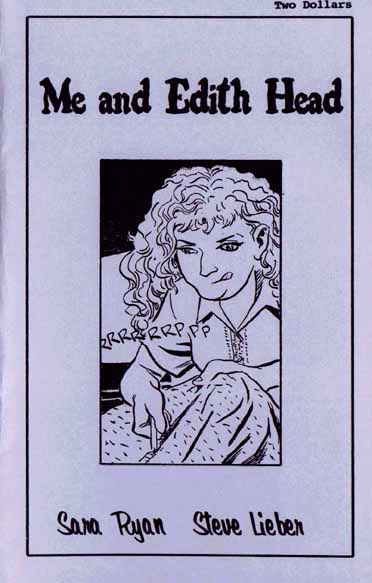
FYC Replay: Me & Edith Head with Sara Ryan and Steve Lieber

Here's another installment in the archiving of my Pulse columns, For Your Consideration. In this one, I had the opportunity to interview, by email, Sara Ryan and Steve Lieber. They were very gracious in taking the time to answer my questions, and when I had the opportunity to meet them in person at the Small Press Expo in 2009, they were just as gracious. The interview is a couple of years old, so the "upcoming projects" question includes work long since completed - except for Mr. Lieber's mention of Greg Rucka's scripts for the third Whiteout miniseries, "Thaw." That has yet to see publication, but I did see the original pages for that first issue - penciled, inked, and lettered - at SPX 2009. I'm not sure when it will find its way onto Oni Press's publication schedule, but when it does, you will not be disappointed. For now, though, enjoy this look at one of the best mini-comics you'll find out there.
Thanks,
chris


FRONT PAGE:
Warren Ellis put it best when he stated, “I’ve always been faintly disgusted by Steve Lieber's level of talent. Now it appears I have to have his wife killed too.” Me and Edith Head is a brilliant lesson in economy. With only fifteen pages, Ryan and Lieber manage to create a complete and fulfilling narrative that will resonate long after you put it down.

The 411:
Me and Edith Head
Written by Sara Ryan
Drawn by Steve Lieber
15pp. b/w
$2.00
Cold Water Press

What It Is (with apologies to Dave the Thune):

Wiser people than I have stated what many know to be true already, but it still bears repeating. Me and Edith Head is one of those gems all fans of the medium should seek out. Originally published in the September/October 2001 issue of Cicada magazine, it stars Katrina Lansdale, a character from Sara Ryan’s first novel Empress of the World. When that issue of Cicada went out of print, Ryan and Lieber decided to publish Edith Head as a 15-page chapbook in 2002 through their own publishing company Cold Water Press, and it was nominated for an Eisner award in the “Best Short Story” category that year.

Katrina is a character easily recognizable to many readers. A high school student dealing with the pressures inherent during that period of our lives, she must also contend with being one of those girls hovering just outside the cliques so ingrained within high school society. Compounding these difficulties, Katrina’s parents are quickly heading toward divorce, something that appears to have been a long time coming. She needs an outlet and auditions for the school play, a production of Shakespeare’s A Midsummer Night’s Dream. Hoping for the part of Titania, Katrina is instead delegated the task of costume designer.

Katrina is disappointed with the position and sees little hope of enjoying her time with the play. But something surprising happens. Katrina discovers a talent for the fashion needs of the company, and with the help of some books on Edith Head – an Oscar-winning costume designer – she discovers an inner confidence of which she was unaware. Growing up is difficult, but sometimes when one’s mind is diverted, it can happen without thinking.

This is an incredible little book. With only fifteen pages, Ryan and Lieber present a fully-fleshed out narrative in which the audience is witness to Katrina’s growth from a troubled teen to a confident young woman. This slim book packs more story into it than any collection from the “Big Two,” with very few exceptions. Ryan and Lieber hit all the high notes of the story, utilizing the comic page to its fullest, while eschewing the padded storytelling practice of decompression so common in many of today’s comics. This husband and wife team also exhibits an understanding of comics as a melding of words and pictures, allowing the images to tell the story in a way most creators never conceive.

One page in particular, in which the audience watches Katrina’s bedroom go from a typical teenage sty to a clean, well-ordered space as snippets of her parents’ dialogue illuminate their decaying relationship, is a prime example of how well thought out and well executed a comic this is. Throughout the story, Ryan’s dialogue is spot-on, and she expands much of the narrative with the unspoken statements lying beneath the characters’ words. And Lieber’s art is as superb as fans have come to expect. He is one of the best artists working in comics today with panels that are fully realized without being cluttered, allowing him to tell any type of story with a craft unmatched by many in the industry. Though not flashy, Lieber’s style is full of substance, and any book drawn by him is always a pleasure to read.

If you’re lucky enough to be attending a convention where Steve Lieber and Sara Ryan are in attendance, seek him out and buy this book. If not, go to Sara's website where you can order it through paypal. You’ll thank me.

An Interview with Sara Ryan and Steve Lieber:

Chris Beckett: What reaction have you gotten from fans at conventions regarding Edith Head and other mini comics you have available?

Steve: The responses have varied from wildly enthusiastic appreciation to indifference to an odd, condescending sort of -- I don't know-- pity, maybe? I'm glad to say that the good reactions have been the most common. The minis I've illustrated are all terrific stories. Edith was nominated for an Eisner; Sean Stewart's Family Reunion was reprinted in The Year's Best Graphic Novels, Comics & Manga. And Sara's first Flytrap story was wonderful. I'm hugely excited that she and Ron Chan are keeping the series going.

The few negative reactions I think just spring from people who haven't grasped that an artist might enjoy telling more than one kind of story. I'm just guessing here, but I get the feeling that the thinking is something like: "You drew Batman and Civil War: Frontline and Whiteout, and here you are with these little xeroxed booklet thingies about characters I've never heard of? What happened?” What happened is that I love drawing both big action stories about larger than life heroes, and smaller, more intimate stories about real people. Mini-comics are a great venue for the latter.

Beckett: With the experience you have in the comics medium, how much input into the story did you have?

Steve: Not much really. Sara's a natural visual storyteller. There might have been a few panels where I'd offer a suggestion to make things flow more easily, but she grasped the underlying mechanisms of comics from the start, and instantly knew how to make her points visually, manipulate time, play word against image -- all the things that a comic writer needs to know intuitively to make the medium work.

Beckett: Why did you choose to present Me and Edith Head as a comic?

Sara: There were a couple of things going on when I decided to write Edith. First, I just wanted to experiment with comics writing. Steve says that comics people are vampires, in that they turn everyone around them into comics people, too. That definitely happened to me. As I read and enjoyed more and more comics and graphic novels, I got increasingly intrigued about the possibility of writing comics myself. And at the same time, I'd just published my first novel, Empress of the World, and introduced some characters that I had -- and have -- a lot of affection for, including Katrina Lansdale. When we meet Katrina in Empress, she's very much a costume and fashion expert, but I knew she hadn't always been that way, and I wanted to tell the story of how she developed that interest and expertise. I also knew that by its nature the story would be very visual, so it just made sense to do it as a comic.

Beckett: Me and Edith Head is as fully realized a story as one could find. How challenging was it to fit it within the fifteen pages of the mini comic?

Sara: Thank you! I tend to write in a very compressed way, whether I'm writing prose or comics. More often than not, I find that I need to add or extend scenes in order for the story in my head to take coherent shape on the page.

Beckett: What was the collaborative process like for you two on Me and Edith Head, and how did it differ from other comics you have done, Steve?

Steve: We just talked about the story and she set to writing. It differed mainly in that I had the writer on-site to clarify matters where I had questions. The script said, "Katrina enters the thrift shop.” I asked how she was entering: tentatively, normally, forcefully? Sara went out of my studio, closed the door behind her and barged back in with squared shoulders and a face that was all business. So I drew that. And it's a story about a teen girl's relationship with clothing and how she dresses, so it was certainly handy for me to have her lean over my board now and then and say things like, "Ooh. She'd never wear that with a belt."

Sara: I would just add that when Steve and I collaborate, it's a little like Calvinball. We keep changing the rules, and sometimes someone has to sing the I'm Very Sorry song. But overall it's fun.

Beckett: What other current or forthcoming projects do each of you have that you might like to speak about?

Steve: I've been doing a ton of commercial and advertising art recently, so a lot of my recent work isn't available in comic’s stores. If you're in Japan, you can see an indoor parade I helped design for the Hello Kitty theme park Sanrio-Puroland. The Thunderbolts Annual I drew for Marvel comes out this month. My current comic projects are Underground - a graphic novel written by Jeff Parker, and a story for the Belgian publisher Dupuis. And of course Greg [Rucka]'s going to be writing the third and final Whiteout book, Thaw. I can't wait to get my hands on that.

Sara: My second novel, The Rules for Hearts, is just out, and I have not one, not two, but three more minicomics collaborations coming soon: "Click," with Dylan Meconis, "Einbahnstrasse Waltz" with Cat Ellis, and the third episode of Flytrap, "Over the Wall," with Ron Chan.

Wednesday, October 13, 2010

Jaime Hernandez knows comic art


I finished reading the latest edition of Love & Rockets: New Stories last week and, as always, was amazed. Gilbert and Jaime are masters of the medium. Beautiful art, simple yet poignant narratives, characters that have evolved as their creators have grown, and stories that build on one another, though it may not be evident until years down the road. I didn't come to the L&R universe until the first oversized collection from Fantagraphics, Palomar, and after that, I was all in.

I was very anxious to receive this book, as Jaime's offerings in this third annual issue were being touted as possibly the best work of his career. Though I've read most of his L&R work, I am not as familiar with it as I would like, so I can't say one way or the other. But I can say that "Browntown," which is the centerpiece here, and "The Love Bunglers" parts one and two are incredibly moving tales. Jaime eases you into the narrative, showcasing fairly simple situations from the Chascarillo family's history. And then, he punches you in the gut with the core of his narrative, which ripples out across all of the stories involving Maggie, in particular, and Hopey by default. "Browntown" is a story that will make you uncomfortable, will make you angry, and will make you cry, all in the course of thirty pages. Jaime really is at the top of his game.

And, as a small sample, here's a detail from one of the story's pages, which showcases how effortlessly Jaime seems able to convey emotion through his artwork. In this 3-panel tier we see young Maggie come to a horrific realization. With little dialogue or its proper context, I expect you can tell what has happened.


And in the details of the first and third panels below, you can see how Jaime so perfectly captures the emotions we wear on our faces every day. Just a few lines, and a slight modification to Maggie’s mouth and eyes, and we feel what she feels.


chris

Monday, October 11, 2010

Batman: the Dark Knight Returns pt 3


It's been a few weeks. But after some technical glitches, I finally made it onto the Legion of Dudes to help them discuss book 3 of Frank Miller's seminal work - Batman: the Dark Knight Returns. The link to the podcast can be found here.

And below are the notes I had for the episode:


- The voice-over in these first four panels perfectly gets across the character of Superman and of Batman. Simple and effective use of language. Miller is very good at boiling down the essence of these legendary characters.
He also has yet to show Superman in panel, giving us his POV in these shots, letting the image build in reader’s minds, making him larger than life, similar to how he’s treated Batman in the book as well.
- PAGE 3: Again, Miller utilizes the voice-over to quickly give readers a rundown of where Batman is at this point in his career.
- PAGE 4: Nice shout-out to Corto Maltese, the series by Hugo Pratt
- PAGES 5-8: Miller balances things well in these pages, introducing Superman (who has also not been seen for some years, apparently) through the new stories, which continues the back and forth of perspectives (the “acid” newsstand operator and the conservative advertising agent) while moving the story forward and exhibiting the atmosphere of the city through the back and forth of the newscasters (the one reciting the Superman mantra while the other warning her off that).
*And the way Miller evokes Superman as a streak of light, makes one think of a heavenly being, one that’s above us all, our savior, which is how he is perceived – a perception that Bruce doesn’t buy into and believes is a danger.
- The Soviet/U.S. tensions over the Corto Maltese incident mirrored the real-life tensions in the world at the time.
- PAGE 10: What a SPLASH page. My favorite of the series.
- PAGE 13: Thanks to the age lines Miller has given Joker, and Miller’s art style, this is one #$%^ing creepy Joker.
- PAGE 14: Our first look at Clark Kent, but still no Superman.
*Miller’s costuming, the use of cowboy boots, adds to the link he wants to give between Superman and the United States.
*And again, his voice-over perfectly captures the feelings Bruce has toward Clark
- PAGE 15: Reagan’s quote: “We’ve got God on our side . . . or the next best thing, anyway,” is very much like the Watchmen line: “Superman exists, and he’s American,” which we discovered in the backmatter was a misquote. It should have been, “God exists, and he’s American.”
- PAGE 16: Very cool we find out what happened to the other heroes, though at the time I first read this, I had no idea who Diana or Hal were.
- PAGES 18-25: “It’s been twenty years since I had to fight cops.” Again, the voice-overs are concise but tell us so much.
In this fight with the cops, we see again that Batman is not the Batman we know. He is old. He can’t manage against such odds. He needs Robin. By having this new Robin, Miller has given himself a natural way to get Batman out of the jams he puts himself in. It works so well.
- PAGE 26: Finally, SUPERMAN
- PAGE 29: I love how Batman is doing the Sherlock Holmes thing – dressing up in costume to get the information he needs. Very cool, and not done nearly enough in his regular series.
- PAGE 38: Another brilliant splash page. And the few lines on Batman’s face and the way he draws his teeth (all gritted) really shows that he’s old and having to work hard to keep doing what he is doing. Miller is complementing the story he created with his art, giving us a bigger, older Batman with his linework.
- THE FINAL BATMAN/JOKER BATTLE: It’s the little moments that make this fight shine:
o Joker’s dialogue: “Out of your mind –” & “This is too weird.” showcase that this is a different kind of fight for these two.
o Batman telling the boy to “watch his language”
- The Batman says it will all end tonight, implying he will kill Joker. In the end, he paralyzes the Joker, and the Joker finishes himself off, knowing that Batman will be pinned for his murder when he actually committed suicide. BUT:
- Did Batman not go through with it, or would he have if given the chance by the Joker? Did he lose his nerve?


Enjoy,
chris

Saturday, October 9, 2010

Warrior27: the Collection for sale @ IndyPlanet


Our 254-page collection of Warrior27 is now available for purchase from Indy Planet, the online store for Ka-Blam, the print-on-demand company we use to print our books. At $24.95, that's less than a dime a page. The book collects almost all of the work found in the previous individual issues, plus a whole bunch of new comics, prose, and interviews. And, for those that might have the original black and white issues, we have newly colored many of those initial comic stories. Anyway, here's the official description, plus interior pages to pique your interest.

Manga Sized Trade Paperback
Full Color

Page Count: 254


A Priest who can see what isn't there. A cowboy riding off into the sun for one final job. A man who discovers you can't go home again. And how far will one man go to retrieve the daughter he lost? All of this and more can be found in this first collection of Warrior27, the comics & prose anthology. Featuring artists from Argentina, the Philippines, British Columbia and all points in between, including early work from Eagle-award nominee Azim Akberali, there's something for everyone inside. Along with favorites from the original issues, new stories and features can be found in this collection, including works initially published by Arcana Press, Dark Recesses Press, and Ape Entertainment, plus a previously unpublished interview with Joe Quesada done in early 2001 - a year into his tenure as Editor-in-Chief of Marvel Comics.

"The Strongest anthology title I've yet come across." -Indy Comic Review


Written and Illustrated by Dan Fleming, Chris Beckett, Dan Lauer, Adrian Bago Gonzalez, Venessa Beckman, Geoff Mosse, Sergio Martinez, SR Ayers, Nadja Smith, Coleen Allen, Jason Copland, Osmarco Valladao, Josh Aitken, Nicolas Colacitti, Daniel Brigs, Christopher Hanchey, Azim Akberali, SA McClung, Joe Howe, Travis Dandro, Matt Constantine, Paul Petzrick, Kevin Sutton, Roy Anthony Amado, Branko Jovanovic, Shane Leonard, Andy Lee


PURCHASE HERE

And some art:


STAR WARS -- a modern trailer

 This came across my feed, and it's pretty stellar, even if it utilizes some special edition cuts.